



 yomi@rulecomposite.com



How much does bulk molding compound cost
 Jul 29, 2026|
 View:680
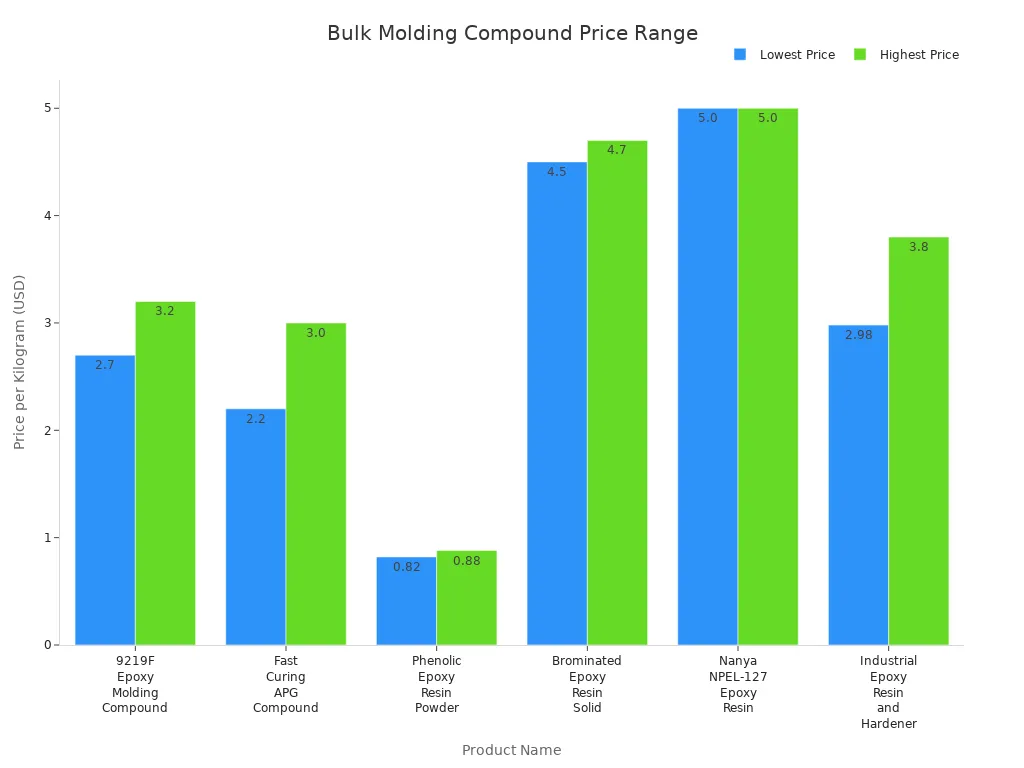
You want to know how much bulk molding compound costs. Prices can range from $0.82 to $5.00 per kilogram, depending on the product and its features. The five main factors that change the price are resin type, fiberglass content, filler ratio, flame retardant rating, and order quantity. The table below shows typical price ranges for different compounds.
Product Name | Price Range (per kilogram) |
|---|---|
9219F Epoxy Molding Compound | $2.70 - $3.20 |
Fast Curing APG Compound | $2.20 - $3.00 |
Phenolic Epoxy Resin Powder | $0.82 - $0.88 |
Brominated Epoxy Resin Solid | $4.50 - $4.70 |
Nanya NPEL-127 Epoxy Resin | $5.00 |
Industrial Epoxy Resin and Hardener | $2.98 - $3.80 |
Key Takeaways
Bulk molding compound prices range from $0.82 to $5.00 per kilogram. Factors like resin type and fiberglass content affect these prices.
Ordering in larger quantities can lead to significant discounts. Always ask suppliers about tiered pricing for bulk orders.
Choosing the right resin and filler can balance performance and cost. Polyester resins are cheaper, while vinyl ester resins offer better durability.
Understanding market trends and regional differences helps you make informed purchasing decisions. Stay updated on industry changes to optimize costs.
Selecting the right packaging can protect your product and reduce shipping costs. Consider options like FIBC bulk bags for cost efficiency.
Bulk Molding Compound Pricing Overview
Typical Price Range
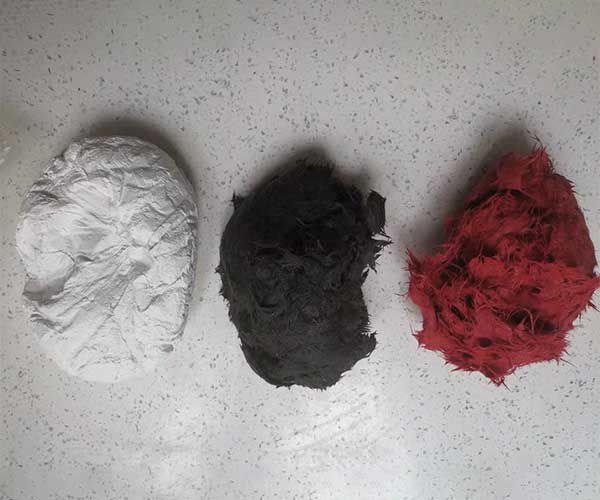
When you look at the cost of bulk molding compound, you will notice a wide range of prices. Most products fall between $0.82 and $5.00 per kilogram. The price depends on the type of resin, the amount of fiberglass, the filler used, and the flame retardant rating. For example, standard unsaturated polyester resin costs less than vinyl ester or epoxy-based compounds. If you choose a product with higher fiberglass content, you will pay more because it offers better strength. Some fillers, like calcium carbonate, help lower the price, while others, such as aluminum hydroxide for flame retardancy, can increase it. You can also save money by ordering in larger quantities, as suppliers often offer discounts for bulk purchases.
Tip: Always compare the technical specifications with the price. Sometimes, a slightly higher price gives you better performance or longer service life.
Market Trends and Regional Differences
You will see that the bulk molding compound market is changing quickly. Several trends shape the pricing and availability:
The market is growing fast, with a projected CAGR of 6.5% from 2026 to 2033.
More car makers want lightweight materials, which increases demand.
New technology, like AI and digital tools, helps companies make better products.
Emerging markets are becoming more important for both supply and demand.
Companies now offer more types of compounds for different uses, which can raise prices for premium products.
Regional factors also play a big role in cost. Some areas have strict rules to lower carbon emissions, which can make production more expensive. Environmental standards add extra steps to the process, raising costs. In places like Hong Kong and Singapore, high manufacturing costs and reliance on imported raw materials can push prices up even more.
If you understand these trends and regional differences, you can make smarter choices when buying bulk molding compound.
Bulk Molding Compound Cost Factors
Resin and Filler Types
You can choose from several resin types when selecting bulk molding compound. Each resin affects the price and performance. Polyester resin costs less and works well for general applications. Vinyl ester resin costs more because it resists chemicals and lasts longer in tough environments. If you need a compound for harsh conditions, vinyl ester may be worth the higher price.
Vinyl ester resins offer better toughness and chemical resistance, which increases the cost.
Polyester resins are more affordable and suit high-volume production.
The higher price of vinyl ester can pay off with longer service life in aggressive environments.
Filler ratio also changes the cost. Calcium carbonate filler lowers the price. Aluminum hydroxide filler increases the price because it adds flame retardancy. If you want to save money, you can select a compound with a higher filler ratio and standard fillers.
Bulk molding compound is less expensive than sheet molding compound because it has lower fiber content.
Higher fiber content raises the cost.
Tip: Compare the resin and filler types with your project needs. You can balance performance and cost by choosing the right combination.
Fiberglass Content and Flame Retardancy
Fiberglass content plays a big role in the price of bulk molding compound. When you pick a compound with more fiberglass, you get better mechanical strength. You also pay more because fiberglass is a costly raw material. If your project needs high strength, you should expect a higher price.
Flame retardancy also affects cost. Compounds with a UL94 V-0 rating cost more than standard grades. These compounds use special fillers and additives to meet strict safety standards. If you need flame retardant properties, you will see a price increase.
Higher fiberglass content improves strength but raises the cost.
Flame retardant fillers, like aluminum hydroxide, add to the price.
You can choose the right balance by thinking about your application. If you do not need high strength or flame retardancy, you can select a standard grade and save money.
Order Quantity Impact
Order quantity changes the unit price of bulk molding compound. When you buy small amounts, you pay more per kilogram. Suppliers charge higher prices for low-volume orders because they need to cover setup and tooling costs. If you order in bulk, you get discounts and lower unit prices.
Here is a table showing how production volume affects per-part cost:
Production Volume | Per-Part Cost Impact |
|---|---|
Low-volume (1,000 to 10,000 parts) | Higher per-part cost due to tooling and setup fees |
High-volume (100,000 to 1,000,000 parts) | Lower per-part cost due to economies of scale |
You can save money by planning larger orders. Bulk purchasing helps you get the best price and reduces the cost per part.
Note: Ask your supplier about tiered pricing. You may qualify for discounts if you order more than the minimum quantity.
Packaging and Order Requirements
Minimum Order Quantities
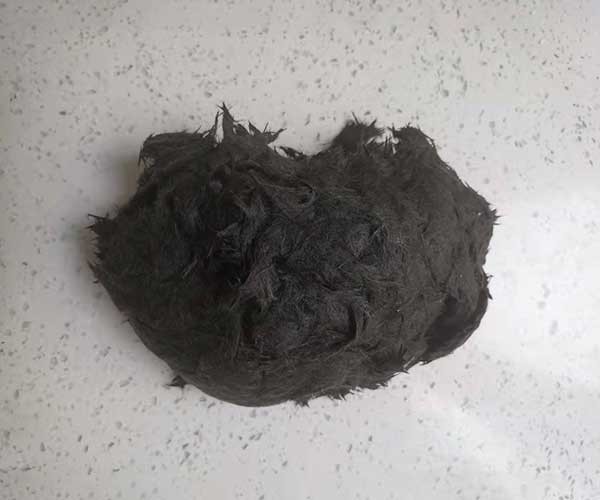
When you plan your order, you need to know the minimum order quantity (MOQ) set by manufacturers. Some companies offer flexible options, so you can start with a small batch or even a single prototype. Others require larger orders for production. Here is a table that shows typical MOQs from leading suppliers:
Manufacturer | Minimum Order Quantity |
|---|---|
High-Precision Custom Compression Molding | No MOQ (1 prototype to 10,000+ units) |
Low Volume Plastic Injection Molding | 1–50 units for CNC/3D printing, 50+ units for injection molding |
You can see that some suppliers let you order just a few units for testing. This helps you try out a new bulk molding compound before committing to a large purchase. For full-scale production, you often need to order at least 220 kilograms. If you order more than 10 tons, you may get a discount.
Tip: Ask your supplier about trial production options. Small MOQs make it easier to test new materials without a big investment.
Packaging Solutions
Choosing the right packaging protects your product and helps you save money. You can pick from several packaging types. Each one has its own benefits and cost impact.
Packaging Type | Advantages | Cost Impact |
|---|---|---|
FIBC Bulk Bags | Heavy-load durability, customizable safety, high cost-efficiency | Generally lower costs due to bulk handling |
Rigid Drums | Standardized but less flexible | Higher costs compared to bulk bags |
FIBC bulk bags work well for large shipments. They keep costs low and handle heavy loads. Rigid drums offer good protection but cost more and are less flexible.
For international shipping, companies like Ronningen Research and Development use foam inserts and corrugated cardboard. These materials protect your parts and reduce waste. They also help you use space better, which lowers shipping costs. Some suppliers, such as PackMojo, offer eco-friendly molded paper pulp packaging. This option is lightweight, durable, and customizable. You can order these in flexible quantities, starting from 100 units.
Using the right packaging keeps your bulk molding compound safe and helps you control costs during shipping.
Reducing Bulk Molding Compound Costs
Bulk Purchasing and Discounts
You can lower your costs by buying in larger quantities. Suppliers often offer tiered pricing, which means the price per kilogram drops as your order size increases. When you plan your purchases, you should ask about bulk discounts. Many companies give special rates for orders over 10 tons. This helps you save money and makes your project more affordable.
Tip: Negotiate with your supplier. Ask for price breaks at higher volumes. You may also request trial batches for testing before committing to a big order.
You can also join purchasing groups or coordinate with other buyers. This strategy lets you reach the minimum order quantity faster and unlock better pricing.
Supplier Selection and Direct Sourcing
Choosing the right supplier makes a big difference in your costs. If you buy directly from the factory, you avoid middleman markups. Factory direct supply gives you access to stable production capacity and consistent pricing. You also get better support and faster communication.
When you select a supplier, check their certifications. Certified suppliers provide quality assurance and help you meet industry standards. Here is a table showing common certifications and their importance:
Certification Type | Importance | Application |
|---|---|---|
UL 94 | Flame retardancy ratings (V-0 for electrical-grade BMC) | Electrical applications |
ASTM | Compliance for mechanical and dielectric properties | General standards |
ISO 9001 | Quality management certification | Leading suppliers in BMC and SMC |
You should ask for certification documents. These papers prove the quality and safety of the bulk molding compound. They also save you the cost of third-party testing, especially for overseas orders.
Note: Reliable suppliers with stable production can handle large orders and keep prices steady. This helps you avoid unexpected price changes.
Logistics and Export Advantages
Smart logistics strategies help you cut costs even more. Full container load (FCL) shipping is one of the best ways to reduce the per-unit cost. FCL maximizes the use of each container, so you pay less for each kilogram shipped. You also lower handling risks and simplify paperwork.
Here is a table that shows how FCL shipping helps you save:
Evidence Description | Key Points |
|---|---|
FCL maximizes container utilization | Reduces costs per unit shipped |
FCL reduces handling points | Lowers risks and simplifies documentation |
FCL can cut freight costs by up to 20% | Achieves economies of scale compared to LCL shipments |
You can also benefit from these advantages:
FCL eliminates per cubic meter charges.
You maximize full container capacity, leading to lower costs per unit.
Port charges and handling costs are incurred once per container.
If you ship overseas, factory direct supply and FCL shipping work together to lower your logistics costs. You get stable pricing and reliable delivery. You also receive certification documents that meet international standards, which makes customs clearance easier.
Tip: Plan your shipments to fill containers completely. This strategy helps you get the lowest possible freight rate.
By using these strategies, you can manage your costs and get the best value for your bulk molding compound orders.
You can manage the cost of bulk molding compound by focusing on several important factors:
Cycle time affects how much you pay for each part. Shorter cycle times help you save money.
Material selection changes the price. Engineering resins cost more than commodity resins.
Secondary operations add extra expenses. Always check all steps in your process.
You can take action to optimize pricing:
Replace virgin materials with certified recycled options.
Order in bulk to secure discounts.
Recycle scrap materials on-site.
Source materials locally to cut logistics costs.
Factor | Influence on BMC Selection and Cost |
|---|---|
Application Requirements | Determines the mechanical, environmental, and electrical needs, which directly affect the choice of BMC formulation and its cost. |
Assess your project needs, plan your order quantity, and work closely with suppliers to get the best value.
FAQ
What is bulk molding compound used for?
You use bulk molding compound to make electrical parts, automotive components, and appliance housings. It works well for compression molding and injection molding. You get strong, heat-resistant products.
How do you store bulk molding compound?
You keep bulk molding compound in sealed, moisture-proof bags or containers. Store it in a cool, dry place. Avoid direct sunlight and high humidity.
Tip: Always check the packaging for signs of damage before use.
Can you order small trial batches?
Yes, you can order trial batches starting from 20–50 kg. This helps you test the material before placing a large order.
Order Type | Minimum Quantity |
|---|---|
Trial Batch | 20–50 kg |
Bulk Production | 220 kg+ |
How do you get the best price for bulk molding compound?
You get the best price by ordering in bulk, choosing factory direct supply, and using full container load shipping. Ask your supplier about discounts for large orders.