

 yomi@rulecomposite.com





Why choose sheet molding compound for electrical enclosure production
 Oct 29, 2026|
 View:7
You choose sheet molding compound for electrical enclosure production because one molded material delivers the full package: strong electrical insulation, thermal and flame resistance, chemical resistance, mechanical strength, design flexibility, and cost efficiency. Few materials cover that range alone. That combination matters when one enclosure must insulate live components, survive heat and chemical exposure, and hold its shape outdoors.
You likely weigh thermoplastics and metals against it. Each option has real strengths and fits specific jobs. Thermoplastics shine in high-volume simple parts. Metals hold up in structural or high-impact roles. A fair comparison treats all three evenly, so you can match the material to your enclosure requirements.
Key Takeaways
SMC provides strong electrical insulation, thermal resistance, and flame resistance in one material.
SMC resists corrosion, chemicals, and UV damage, making it ideal for outdoor and coastal installations.
SMC offers design flexibility and cost efficiency through part consolidation and reduced secondary operations.
SMC fits demanding environments where insulation, corrosion resistance, and strength must all hold at once.
Match the SMC grade to your specific service conditions for optimal performance and safety.
Electrical and thermal performance of sheet molding compound
Dielectric strength and insulation
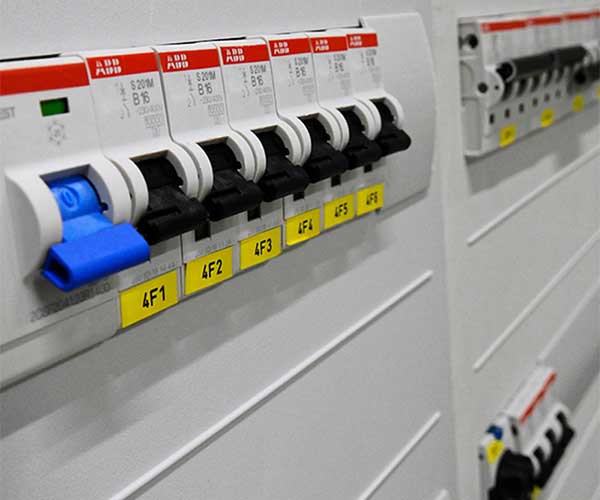
Dielectric strength tells you how much voltage a material can take before current punches through. For an electrical enclosure, that number decides your wall thickness, your clearances, and your safety margin. A specific SMC grade reports an electric strength of at least 22 kV/mm as a specimen test result. Treat that figure as a starting point, not a guarantee. Real insulation performance in a finished enclosure depends on wall thickness, geometry, interfaces between molded sections, molding defects, and the operating conditions on site.
Published ranges give you a practical planning window. Sheet molding compound typically lands between 10 and 18 kV/mm, while bulk molding compound reaches 12 to 20 kV/mm. The table below puts those ranges side by side.
Material | Dielectric Strength (kV/mm) |
|---|---|
Sheet Molding Compound (SMC) | 10 – 18 |
Bulk Molding Compound (BMC) | 12 – 20 |
You gain more than raw breakdown voltage. The material keeps its insulating properties in humid environments, so switchboxes and transformer housings hold their safety margin through damp seasons and washdowns. That reliability lets you design thinner walls with confidence and still meet your clearance targets.
Flame, heat, and chemical resistance
Heat is the second test. According to the Menzolit® SMC 0180 product documentation, this grade for electrical applications carries a continuous service rating of 165 °C. The same source lists heat distortion resistance above 200 °C. You can run an enclosure near hot components for years without sagging, warping, or losing shape. Flame-retardant formulations add another layer of protection for equipment that must contain a fault without spreading fire.
Chemical and weathering durability round out the package. Consider what the material does in tough environments:
Zero corrosion: the composite matrix has no metal to oxidize, so it never rusts in salt air or wastewater.
Chemical durability: it stays stable against acids, alkalis, fuels, and most solvents.
Chloride resistance: the material is chemically inert to chloride ions, so coastal installations need no cathodic protection or coating renewal.
H₂S resistance: it resists hydrogen sulfide attack in wastewater and sewer-gas settings, protecting the cover and gasket.
UV resistance: integrated UV inhibitors prevent fading, chalking, and surface embrittlement, and UV-stable pigments run through the resin rather than sitting on top as a coating.
Low maintenance: no sandblasting, painting, or coating cycles.
These traits suit coastal cities, refineries, wastewater plants, and roadways exposed to deicing salts. You specify one material and skip the maintenance schedule that steel demands.
Manufacturing advantages of SMC
Rule Composite formulates its SMC/BMC materials from unsaturated polyester resin, fiberglass reinforcement, fillers, and additives. These compounds run in compression, injection, and transfer molding processes. That formulation freedom lets you tune the material to your enclosure program instead of bending the design around a fixed grade.
Strength-to-weight ratio
Sheet molding compound carries longer glass fibers at higher fiber content than bulk molding compound. That structure gives it superior stiffness and strength for load-bearing enclosure parts. You get a stiff wall, a rigid mounting plane, and a cover that resists deflection, all at a fraction of the weight of an equivalent steel fabrication. Molded ribs add flexural strength without adding bulk. Integrated bosses give threaded fasteners a solid anchor. Embedded metal inserts form reinforced joints during the primary molding cycle, so you skip a secondary assembly step.
Dimensional stability holds the payoff. SMC matches the coefficient of thermal expansion of steel, so your enclosure stays aligned through temperature swings. Low shrinkage keeps critical tolerances tight across long production runs. A high-gloss surface comes out of the tool ready to install, and UV-resistant formulations protect that finish outdoors.
Design flexibility and cost
Precision compression molding forms complex geometries with varying wall thicknesses in one cycle, without internal stress points. You can consolidate multiple brackets, housings, and reinforcement plates into one unified composite structure. Wiring channels, airflow paths, and mounting tabs build directly into the structural part. Part consolidation cuts fasteners and joining operations, and that reduction is where much of the cost saving lives.
Cycle time shapes the economics too. Compare the two processes:
Process | Typical Cycle Time |
|---|---|
Compression molding (incl. SMC) | 60–300 seconds |
Injection molding of thermoplastics | 15–60 seconds |
Injection molding runs faster, so thermoplastics keep the edge on high-volume simple parts. SMC offsets its longer cycle with minimal prep, greater uniformity in large-scale manufacturing, and fewer secondary operations. Material cost runs higher than BMC, yet high-volume production absorbs that premium through efficiency. Small-to-medium orders also move quickly, which suits OEM enclosure projects and regionally delivered infrastructure components.
Applications in electrical equipment
Outdoor and industrial enclosures
Outdoor duty punishes weak materials. Rain, salt air, and sunlight attack metal surfaces year after year. Sheet molding compound removes that battle. The composite has no metal to oxidize, so it never rusts in coastal air or wastewater. Market research from Grand View Research confirms the pattern: SMC lowers upkeep expenses and prolongs the usable lifespan of products, which makes it a favored material for water systems, construction panels, and outdoor electrical enclosures.
You gain a long service life with minimal maintenance in harsh environments. That same report ties construction demand to materials that resist moisture, chemicals, and weathering. You can specify one molded enclosure and skip the repainting, sandblasting, and coating renewal that steel demands. Your maintenance crew spends its hours elsewhere.
Switchgear and junction boxes
Switchgear demands insulation you can trust at high voltage. SMC composites deliver strong electrical insulation and corrosion resistance, which is why builders use them for electrical cabinets, switchgear housings, distribution boxes, and insulation panels. The table below shows how the composite stacks up against metal.
Property | SMC Composite | Metal Enclosures |
|---|---|---|
Electrical Insulation | Excellent (natural insulation, safe for high-voltage switchgear) | Requires additional insulation |
Corrosion Resistance | Excellent (weather/UV durable, indoor & outdoor use) | May corrode |
Bulk molding compound covers the smaller parts inside the cabinet. Typical BMC-molded electrical parts include switchgear components, circuit breaker housings, insulator parts, meter boxes, terminal blocks, and connector housings. Mold design for these parts emphasizes dimensional accuracy, surface quality, insulation requirements, and long-term reliability. You get precise fit and stable performance across the assembly.
SMC vs. thermoplastics and metals
You have three credible paths for an enclosure program. Each one wins on different ground. A balanced look shows you where thermoplastics and metals earn their place, and where sheet molding compound takes the lead.
Where thermoplastics fit best
Thermoplastics own high-volume runs of simple parts. Injection molding cycles in 15 to 60 seconds, so a straightforward cover or small housing comes off the tool fast and cheap. You get consistent color, easy recycling, and low unit cost at scale. For a clean indoor cabinet with modest electrical and thermal demands, that speed is hard to beat.
Harsh service conditions change the picture. Thermoplastic rubber swells and loses mechanical strength when it meets aromatic hydrocarbons and chlorinated solvents. Chemical attack speeds up at elevated temperatures. Concentrated oxidizing agents can cause irreversible embrittlement. Thermoplastics also creep under heat combined with mechanical load, which can shift hole locations, clamping force, and flatness over time. A brief temperature spike may leave the part intact yet still unfit for continuous structural duty. Practical limits depend on load, exposure time, geometry, and safety factors, so you must test against your real duty cycle.
Where metals still make sense
Metals remain the right call for structural or high-impact needs. A steel frame carries heavy switchgear, absorbs forklift strikes, and holds tight tolerances under vibration. Weldability and repairability help in the field. You also get well-understood design codes and abundant fabricators.
Corrosion is the trade-off you manage. Metals rust or corrode when exposed to moisture or chemicals, so outdoor and coastal installations need coatings, galvanizing, or scheduled repainting. Weight adds another cost at installation. The table below sums up the gap.
Attribute | Sheet Molding Compound (SMC) | Metals |
|---|---|---|
Weight | Lightweight structures; lighter parts than metal, easing installation | Heavier; metal-like strength comes with added weight |
Corrosion Resistance | Excellent chemical resistance; does not rust; resists corrosion from moisture and chemicals | Can rust or corrode when exposed to moisture or chemicals |
SMC weighs less than metal and does not rust. Metals can rust or corrode when exposed to moisture or chemicals. SMC resists corrosion and keeps your equipment working longer. You also get lighter parts with SMC, which makes installation easier.
SMC sits between these options for demanding enclosure environments. It insulates without extra barriers, resists flame and chemicals, and holds dimensions through temperature swings. You consolidate brackets and bosses into one molded part and skip secondary assembly. Thermoplastics suit high-volume simple parts. Metals suit structural or high-impact roles. SMC fits the tough middle ground: outdoor, coastal, industrial, and high-voltage enclosures where insulation, corrosion resistance, and strength must all hold at once.
Sheet molding compound earns its place as a strong default for electrical enclosure production. One molded material gives you insulation, flame and chemical resistance, mechanical strength, design freedom, and cost efficiency together. You avoid the extra barriers, coatings, and maintenance cycles that other materials demand.
The comparison stays simple. Thermoplastics suit high-volume simple parts. Metals suit structural or high-impact needs. SMC fits demanding enclosure environments where several requirements must hold at once.
Match the material to your application requirements. Weigh operating temperature, impact exposure, UV and weather conditions, chemical contact, moisture absorption, and total cost. Check the actual grade data against your service environment. That disciplined match, not a single headline property, decides which material serves your enclosure best.
FAQ
Does SMC insulate as well as a metal enclosure with added barriers?
You get insulation built into the material itself. Metal needs extra barriers to reach the same safety level. SMC grades typically deliver dielectric strength in the 10–18 kV/mm range, so you design thinner walls and still meet your clearance targets.
How does SMC hold up outdoors and near the coast?
The composite has no metal to oxidize, so it never rusts in salt air or wastewater. It resists chloride ions, hydrogen sulfide, and UV exposure. You skip repainting, sandblasting, and coating renewal, and your maintenance crew spends its hours elsewhere.
Can SMC handle the heat inside a working enclosure?
Yes. Electrical grades carry continuous service ratings up to 165 °C, with heat distortion resistance above 200 °C. Your enclosure holds its shape near hot components. Flame-retardant formulations add protection when equipment must contain a fault without spreading fire.
When should you pick thermoplastics or metal instead?
Thermoplastics win on high-volume simple parts, where injection molding cycles in 15–60 seconds. Metals suit structural or high-impact needs, such as heavy switchgear frames. SMC fits demanding environments where insulation, corrosion resistance, and strength must all hold at once.
What should you check before specifying an SMC grade?
Match the grade data to your real service conditions. Weigh operating temperature, impact exposure, UV and weather, chemical contact, and moisture. Confirm wall thickness and clearances against the dielectric figures for your chosen grade. That disciplined match decides which material serves your enclosure best.