


 yomi@rulecomposite.com



What Is the Difference Between Marine Resin and Standard Polyester Resin
 Sep 22, 2026|
 View:17
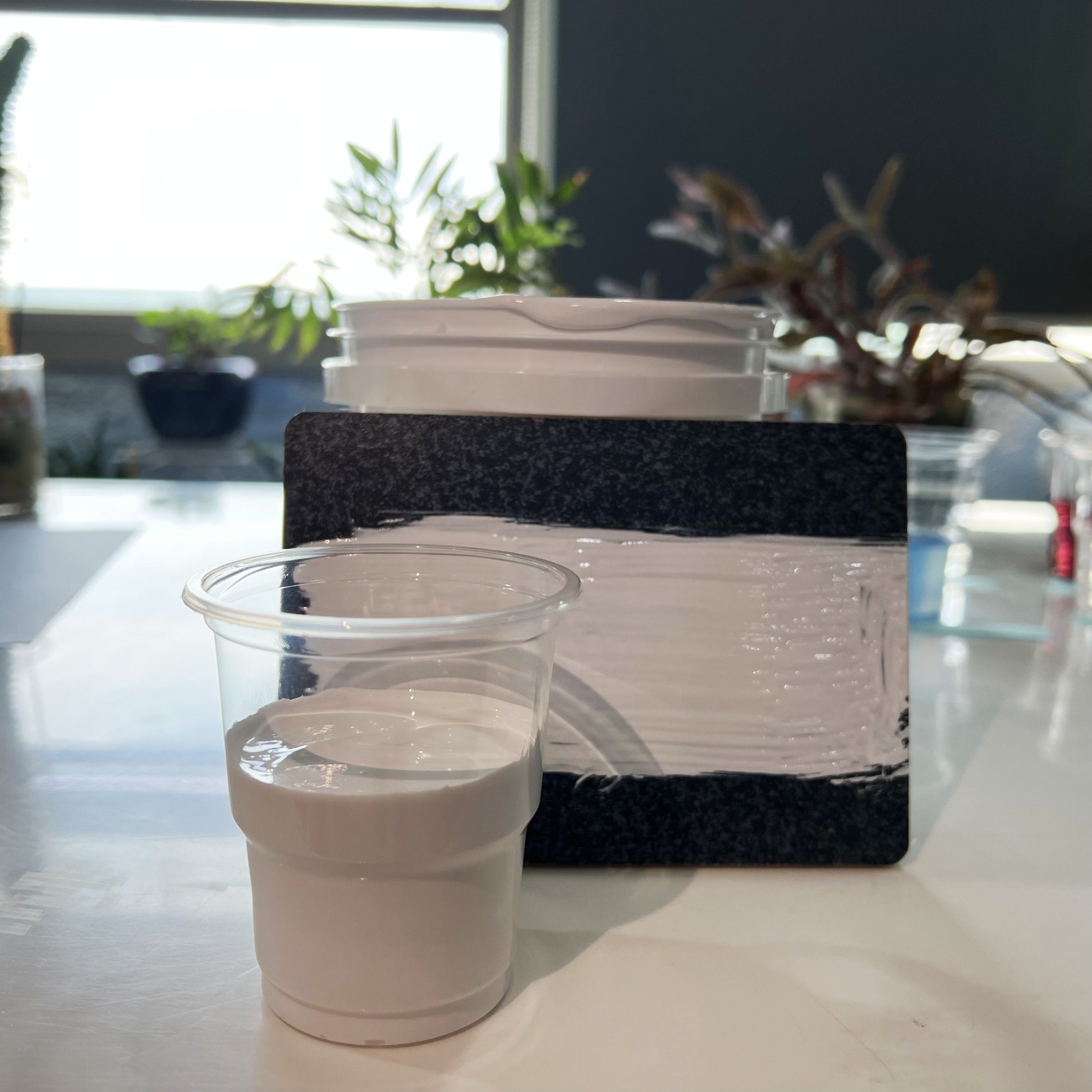
Marine resin is a specially formulated unsaturated polyester, like Rule Composite's Marine Resin, engineered for wet environments, while standard polyester resin is a general-purpose resin not suited for prolonged water exposure. If your project involves boats, docks, or outdoor exposure, choose marine resin; for dry indoor crafts, standard resin works fine. This single distinction drives every practical choice you will make about materials, cost, and long-term performance. Water and sunlight break down ordinary polyester over time. A resin built for wet conditions resists that damage. Your project location and exposure decide which product fits your needs.
Key Takeaways
Marine resin includes UV inhibitors and water-resistant additives to protect against sun and water damage.
Standard polyester resin lacks these additives, causing it to blister and crack in wet or sunny conditions.
Choose marine resin for boats, docks, and outdoor projects to ensure long-lasting durability.
Use standard polyester resin for indoor, dry projects to save money without sacrificing performance.
Chemical Composition of Marine Resin
Additives in Marine Resin
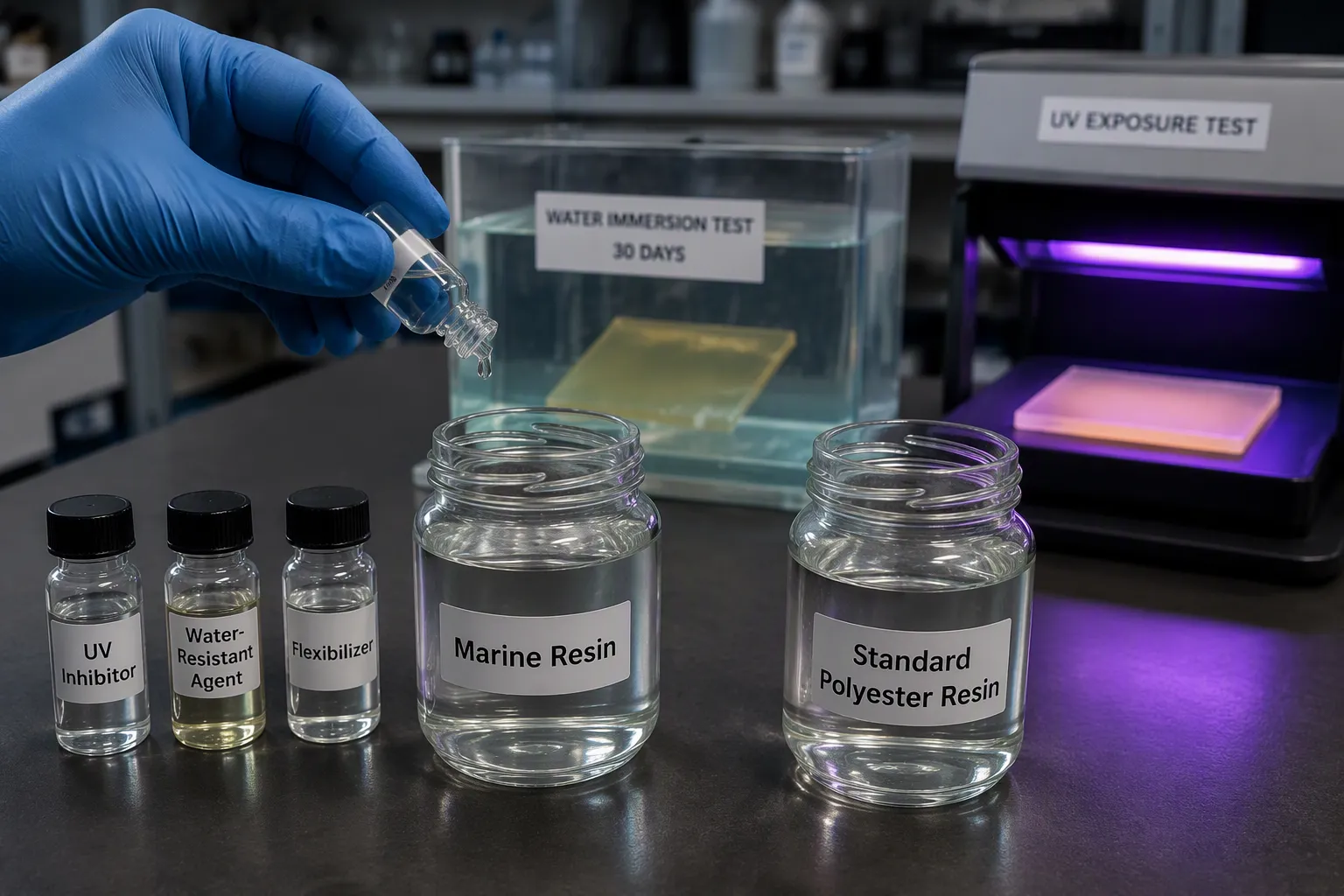
Marine resin contains three important additives. These additives are mixed into the resin during manufacturing. They give the resin its special abilities.
The first additive is a UV inhibitor. This chemical absorbs ultraviolet light from the sun. It prevents the resin from breaking down. Without it, the resin would become brittle and discolor. The UV inhibitor keeps the resin strong in outdoor light.
The second additive is a water-resistant agent. This compound reduces water absorption. It helps the resin form a waterproof barrier. This barrier stops moisture from reaching the material underneath. It also prevents hydrolysis and blistering. Hydrolysis happens when water attacks the resin chemically. Blistering occurs when water collects under the surface. The water-resistant agent stops both problems.
The third additive is a flexibilizer. This substance makes the resin flexible. A rigid resin cracks under movement. Boats and marine structures vibrate constantly. The flexibilizer allows the resin to bend slightly. It stays bonded to fiberglass, wood, and metals. It resists cracking from impact or stress.
These three additives work together. They make marine resin suitable for wet environments. Standard polyester lacks all three. It is a basic unsaturated polyester without any modifiers.
Standard Polyester Resin Composition
Standard polyester resin has a simple composition. It consists of an unsaturated polyester dissolved in styrene monomer. The styrene acts as a solvent and crosslinking agent. This mixture cures into a rigid plastic.
Standard polyester does not have UV inhibitors. It does not contain water-resistant agents. It does not include flexibilizers. This makes it a general-purpose resin. It works well for indoor projects that stay dry. It does not last long in water or sunlight.
When standard polyester touches water, it absorbs moisture. The water causes the resin to swell. Swelling leads to blistering and delamination. The resin becomes brittle over time. Cracks form easily under stress. The resin loses its bond to the surface. These problems happen because the resin lacks the protective additives found in marine resin.
Standard polyester also has weaker adhesion. It bonds to fiberglass but not as strongly. It does not handle movement well. A small impact can cause cracking. This makes it unsuitable for structural marine parts.
Marine Resin Grades for Different Methods
Rule Composite offers marine resin in several grades. Each grade serves a specific application method. The grades have different gel times and cure characteristics.
RC-123(N)W: designed for hand lay-up. It has a longer gel time for manual application.
RC-123(N)M: made for spray application. It cures faster to prevent drips.
RC-189C: intended for vacuum bagging. It has a specific viscosity for pressure molding.
Other grades include RC-123(N)S, RC-189NPTM, TR-189, and TR-8200. Each grade adjusts properties like gel time, viscosity, and cure speed. This variety shows that marine resin is a family of specialized formulations. Standard polyester resin usually comes in one or two general-purpose types.
The additives in marine resin are present in all grades. The UV inhibitor, water-resistant agent, and flexibilizer are part of every formulation. The differences between grades relate to application method and cure speed, not to the protective additives.
This chemical composition explains why marine resin performs better in wet environments. The additives provide protection that standard polyester lacks. For any project exposed to water or sunlight, marine resin is the correct choice. Standard polyester is a cost-effective option for dry indoor projects.
Why Marine Resin Excels in Water Resistance
Resistance to Hydrolysis and Blistering
Water destroys ordinary polyester through a process called hydrolysis. Hydrolysis happens when water molecules attack the chemical bonds inside the resin. This attack breaks the polymer chains apart. The resin loses its strength and structure. Marine resin fights this process through its water-resistant additives.
Rule Composite's Marine Resin forms a waterproof barrier on the surface. This barrier blocks moisture from entering the material underneath. The water-resistant agents inside the resin repel water molecules. They prevent the chemical attack that causes hydrolysis. The result is a protective layer that keeps structures sound.
Blistering is another common problem in wet environments. Blisters form when water collects under the resin surface. The trapped water expands and pushes the resin outward. This creates visible bumps and weak spots. Marine resin prevents blistering because water cannot penetrate its surface. The waterproof barrier stops water from pooling under the gel coat.
Testing shows how well marine-grade resins resist hydrolysis. Accelerated immersion aging tests place resin samples in water at high temperatures for extended periods. Researchers measure tensile strength and elongation before and after exposure. A retention rate above 80 percent of initial mechanical values indicates excellent hydrolysis resistance. Marine resin formulations are designed to meet this threshold. Standard polyester fails this test because it absorbs water and swells.
Long-term field performance confirms these laboratory results. Marine applications require materials that last more than 10 years in constant water contact. Marine resin retains its integrity under these conditions. Standard polyester becomes brittle and cracks within a few seasons of water exposure.
Flexibility and Strength in Wet Conditions
Water exposure makes standard polyester brittle. The resin absorbs moisture and swells. Swelling creates internal stress. The material loses its ability to bend without breaking. Cracks form at stress points. These cracks allow more water to enter. The damage accelerates over time.
Marine resin solves this problem with flexibilizers. These additives keep the resin flexible even after long water exposure. The resin bends slightly under pressure instead of cracking. This flexibility matters for boats and docks. These structures move constantly with waves and wind. A rigid resin would crack under this movement. A flexible resin moves with the structure.
Adhesion is equally important. Marine resin bonds strongly with fiberglass, wood, and metals. This strong bond prevents delamination. Delamination happens when the resin separates from the material underneath. Water seeps into the gap and causes corrosion. Marine resin maintains its grip even in wet conditions. Standard polyester loses adhesion over time. Water works its way under the resin and breaks the bond.
Steam resistance testing shows how marine resin handles extreme moisture. Samples exposed to saturated steam at 100 to 120 degrees Celsius for 100 to 500 hours show minimal dimensional changes. Linear swelling stays below 1 percent. No visible surface degradation appears. Standard polyester shows plasticization and strength loss under the same conditions.
The combination of flexibility and adhesion gives marine resin its durability. The resin moves with the structure. It stays bonded to the surface. It resists cracking from impact or vibration. These properties ensure long-lasting protection in the harshest wet environments.
UV Resistance and Cost: Marine Resin vs Standard
Built-in UV Stabilizers
Sunlight damages ordinary polyester resin over time. Ultraviolet radiation breaks the chemical bonds inside the plastic. This damage causes discoloration, chalking, and surface cracking. The resin loses strength and becomes brittle. Marine resin contains UV inhibitors that absorb this harmful radiation. These stabilizers protect the resin from photodegradation. The material keeps its color and structural integrity after long sun exposure.
Standard polyester lacks these protective additives. A boat hull or outdoor panel made with standard resin will fade within months. The surface turns chalky and rough. Small cracks appear and spread. Water enters these cracks and causes further damage. Marine resin prevents this cycle because its UV stabilizers work throughout the material, not just on the surface. This protection lasts for the life of the resin.
Price Differences and Value
Marine resin costs more per gallon than standard polyester. The additives and specialized formulations increase production costs. A buyer pays a premium for the UV inhibitors, water-resistant agents, and flexibilizers. This higher upfront price reflects the extra chemistry inside the product.
The value calculation changes over time. Standard polyester saves money at purchase. It fails quickly in wet or sunny conditions. Replacement and repair costs add up. Marine resin lasts much longer in these environments. One application often outlasts several applications of standard resin. For boats, docks, and outdoor structures, the long-term savings justify the higher initial cost. For indoor crafts that never see water or sun, standard polyester remains a cost-effective choice.
Applications for Marine Resin and Standard Resin
Marine and Outdoor Projects
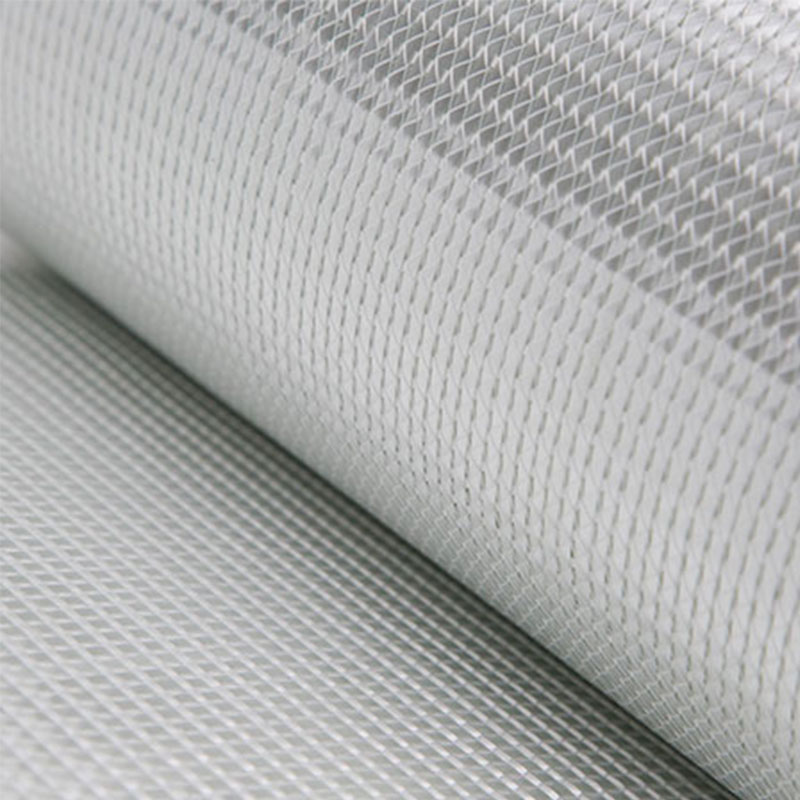
Marine resin serves a wide range of demanding applications. Boat hull repairs require a material that resists constant water contact. Marine resin bonds strongly with fiberglass. It forms a durable repair that lasts for years. Fiberglass reinforcement on decks and transoms depends on the same waterproof qualities. The resin binds layers of fiberglass together. It creates a solid structure that does not delaminate.
Underwater coatings use marine resin for protection. These coatings cover hull bottoms and through-hull fittings. They prevent corrosion and structural degradation. Marine hardware bonding is another common use. Components like cleats, winches, and rod holders attach to the deck. Marine resin holds them securely. It withstands vibration and impact without cracking.
DIY marine projects also call for this specialized resin. Building a custom dock requires water-resistant materials. Repairing a kayak needs a resin that bonds underwater. Reinforcing a paddleboard demands flexibility with strength. Marine resin provides all these properties. It handles saltwater, freshwater, and sun exposure. The resin cures into a tough, flexible finish. It does not become brittle over time.
Outdoor structures that are not strictly marine also benefit. Decks, patio furniture, and exterior trim see rain and sunlight. Marine resin protects these items from moisture damage. It stops UV degradation. Standard polyester would fail quickly under these conditions. Marine resin delivers long-term performance.
Indoor and General‑Purpose Uses
Standard polyester resin works well for indoor projects. These projects never contact water or direct sunlight. A craftsman building a display model uses standard resin. The model sits inside a home or workshop. It does not face rain or UV rays. Standard polyester cures to a rigid finish. It holds its shape. It remains stable for years.
Molds and tooling are common indoor applications. Standard resin forms the backing for silicone molds. It creates stiff supports for vacuum forming. These molds stay inside a workshop. They do not need water resistance. Standard polyester provides adequate strength at a lower cost.
Non-structural parts also suit standard resin. Decorative objects, art pieces, and small castings use this material. A hobbyist creating a tabletop sculpture chooses standard polyester. The piece never goes outside. It does not need UV stabilizers. It does not require flexibilizers.
The choice between resins depends on exposure. For any project that contacts water or sunlight, marine resin is the correct material. For indoor, dry projects that stay protected, standard polyester offers a cost-effective alternative. Matching the resin to the environment ensures the best results.
Marine resin contains UV stabilizers and water-resistant additives. These ingredients make it ideal for boats, docks, and outdoor structures. Standard polyester lacks these protective components. It blisters and becomes brittle after water or sun exposure.
For any project that will contact water or sunlight, invest in a quality marine resin like Rule Composite's Marine Resin. For indoor, dry projects, standard polyester is a cost-effective alternative.
When in doubt, if moisture or UV exposure is a factor, always choose marine resin for lasting results. This simple rule protects your project and saves money over time.
FAQ
Can marine resin be used for indoor projects?
Yes. Marine resin works indoors. Standard polyester resin costs less, though. It performs just as well in dry environments. Choose standard resin for indoor work. It saves money.
Is marine resin worth the higher price?
Marine resin costs more upfront. It resists water and UV damage. Standard polyester fails quickly outdoors. Marine resin lasts longer. This saves money on repairs and replacements over time.
Can standard polyester resin be used on a boat hull?
No. Standard polyester absorbs water. It swells, blisters, and becomes brittle. Marine resin withstands constant moisture and movement. It is the correct material for boat hulls.
How long does marine resin last in water?
Marine resin retains integrity for more than ten years in constant water contact. Standard polyester fails within a few seasons. The water-resistant additives make this long-term protection possible.